What you need to know about irrigation systems
Smart Irrigation Controllers
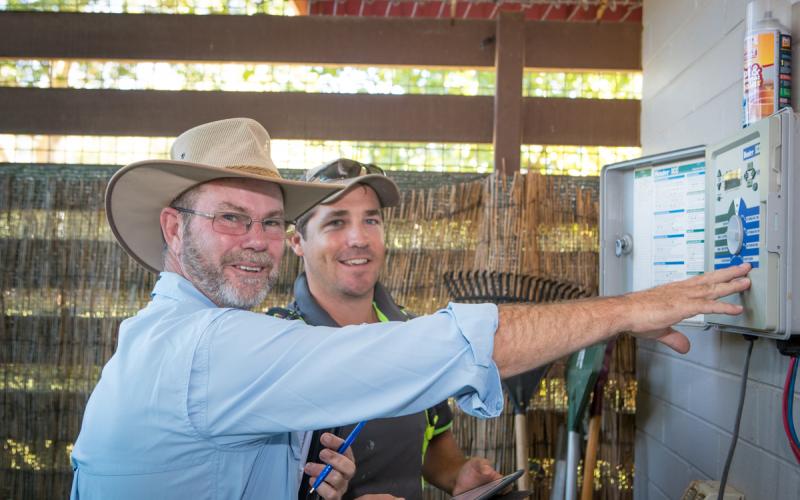
Smart irrigation controllers can save homes and business up to 10-15% on an already efficient irrigation schedule. These extra water savings are possible as smart controllers automatically adjust irrigation watering based on local weather conditions. Rather than just turning the system on for the dry and off for the wet, smart controllers automatically adjust the amount of water applied to your garden according to weather data it reads from local weather stations. They can even delay your irrigation programming if rain is forecast!
This automation also reduces labour time spent manually updating seasonal settings, which is a big win when conditions change fast. This is particularly useful in the Top End where we can receive significant rainfall in the shoulder periods, between the Wet and the Dry.
Smart irrigation controller perks include:
- Linking to a flow meter to spot leaks or shut the system off automatically
- Alerts for wiring or solenoid issues
- Remote control via phone or tablet—anywhere, anytime
- Easy-to-read water use and run-time data
- Water-saving reports based on schedule changes.
Make sure your sprinklers are pointed in the right direct and inspect your irrigation lines for faults and issues
If your system runs at night or while you’re out, you may never spot sprinklers watering concrete or leaks quietly wasting water. It's a good idea to check irrigation zones once a month for any faulty pipes, sprinklers or leaks.
Check your irrigation controller program
Programming multiple start times into your controller is a big trap. Many people program multiple start times, assuming that they are entering separate start times for each irrigation zone. What they are actually doing is telling the controller to run through an irrigation schedule multiple times on the days it is programmed to come on. Seek advice, check your manual or download a new one if you are unsure.
Use pressure management
Without pressure regulation, irrigation zones can flow at 30–60L/minute, even when the plants only need around 2L/minute. Without proper regulation, drippers and connectors end up holding back excess pressure, making leaks far more likely and bigger when they happen.
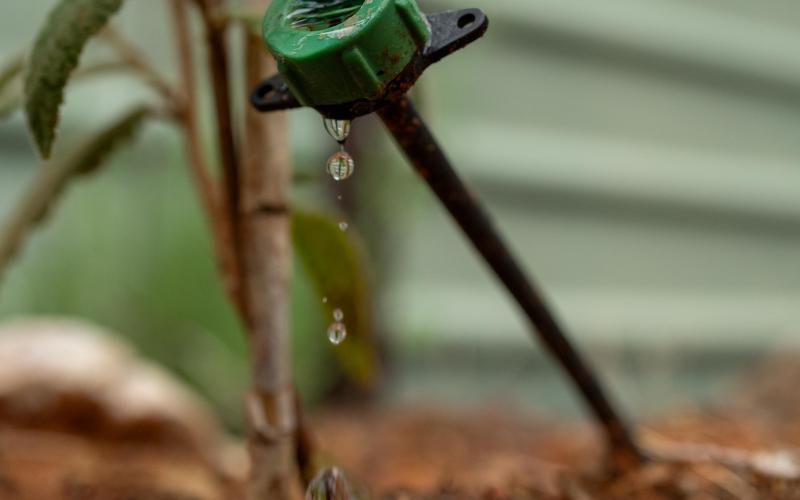
Pressure-regulating drippers help too. They cost only a little more, but ensure each dripper delivers the amount it claims. Without pressure control, a 4L/hour dripper can push out up to 20L/hour—multiply that across 30 drippers and you could waste 500L/hour. Look for “PC” (pressure compensating) on the dripper.
Do you know the flow rate of your drippers?
Drippers can vary from 2-120L/hour so if you don’t, it may be worth replacing them with 4L/hour pressure compensating drippers. That way you will know how much water you’re putting on and be able to use our irrigation scheduler.
Shade your tap mounted irrigation controllers
Put a bucket over exposed tap mounted controllers to shade them. They will last much longer when they are protected from the sun.
Draw a mud map of your garden
Sketch out where pipes, drippers, and irrigation lines run and store it somewhere handy. That way you will be able to check where your buried dripper lines are in future.
What to look for in a good irrigation controller
There are so many different irrigation controllers out there that it can be confusing choosing the best one for your situation.
- Consider installing a smart irrigation controller - they will do all the work for you!
- Decide if you want to have a wall mounted multiple station irrigation controller or a tap mounted timer. If you only have one or two drippers or sprinkler zones a tap mounted controller should be fine, but if you have many more a wall mounted controller that can run multiple lines may be better.